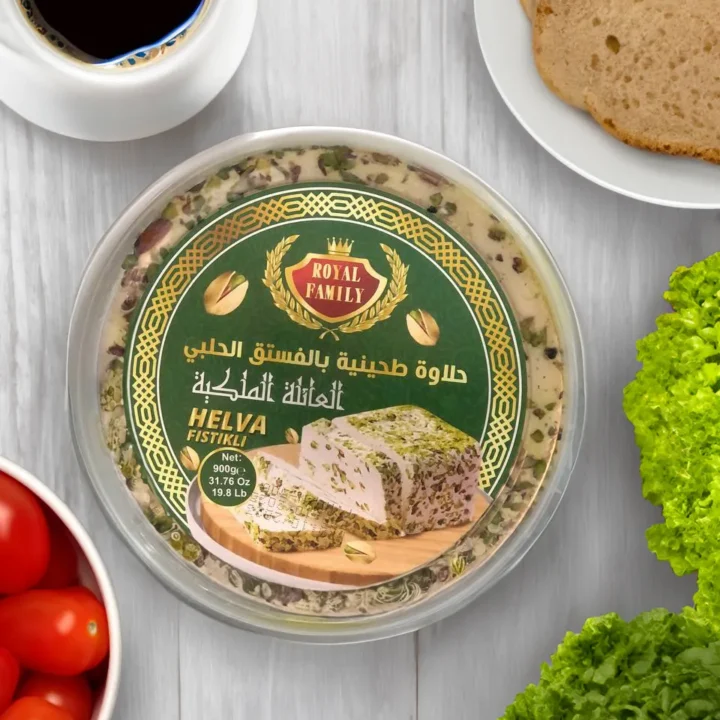
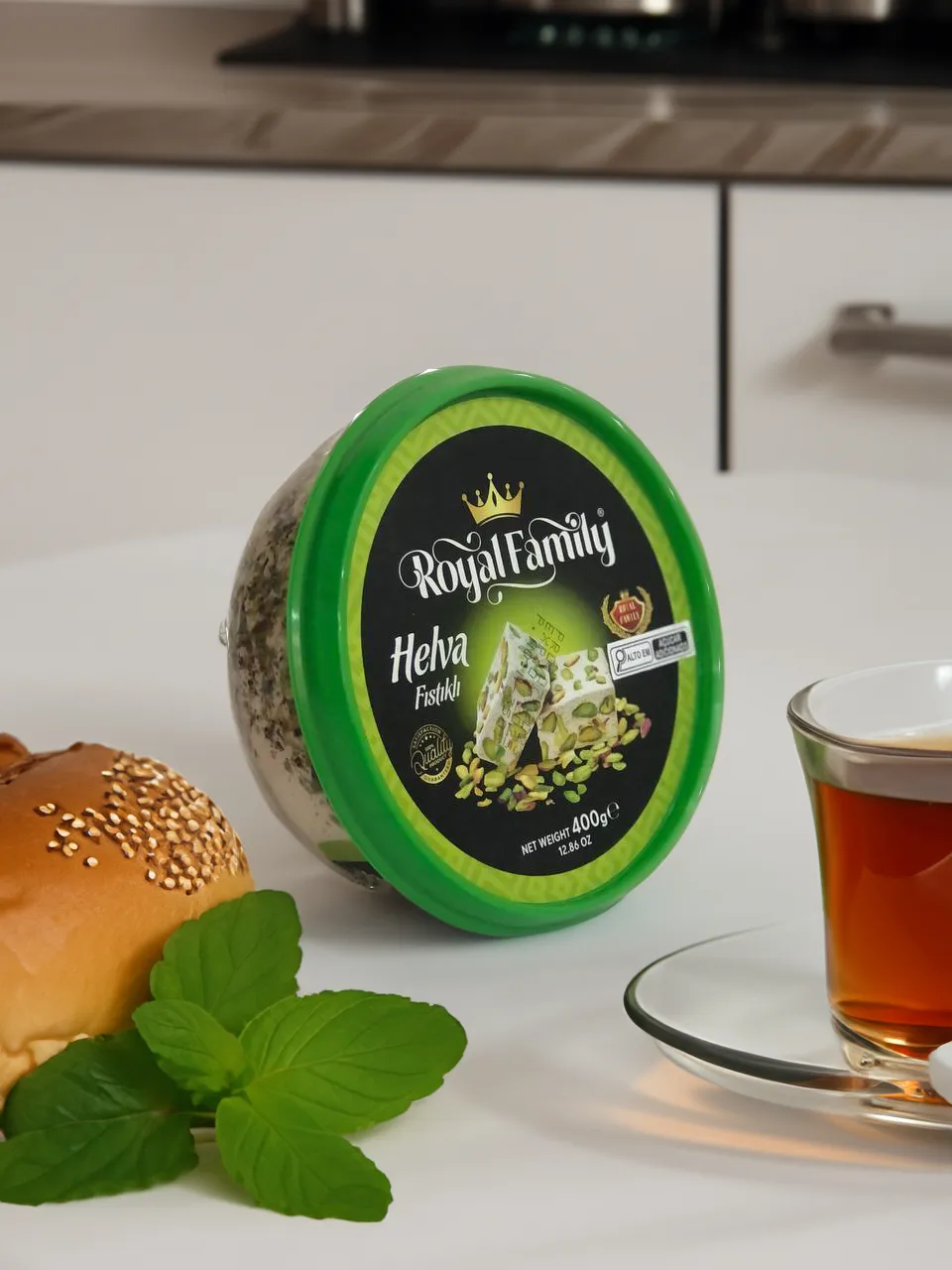
The word “halva” comes from the Arabic “halwa”, meaning sweet. Over the centuries many kinds of halva appeared, from semolina to flour-based ones, but halva made with tahini earned a place of its own thanks to its unique flaky texture.
From the palace kitchen to every table
The Ottoman palace kitchen is known to have had a separate section just for halva, the helvahane. In time tahini halva left the palace for the bazaars and from there reached people’s homes. Today it is part of breakfast and of welcoming guests in many countries, from Türkiye to the Balkans and the Middle East.
Where does the flaky texture come from?
The secret of tahini halva is in the kneading. Tahini is worked patiently and for a long time with sugar syrup prepared the traditional way. The fine fibres formed in the process give halva its familiar melt-in-the-mouth texture. In pistachio or cocoa varieties, the extra ingredients are added at this stage.
Good halva does not crumble when you cut it — it melts when you taste it.
How to serve halva
- In thin slices at breakfast, with tea
- In a sandwich, as a snack children love
- Crumbled over ice cream and milk puddings
- Served alongside Turkish coffee
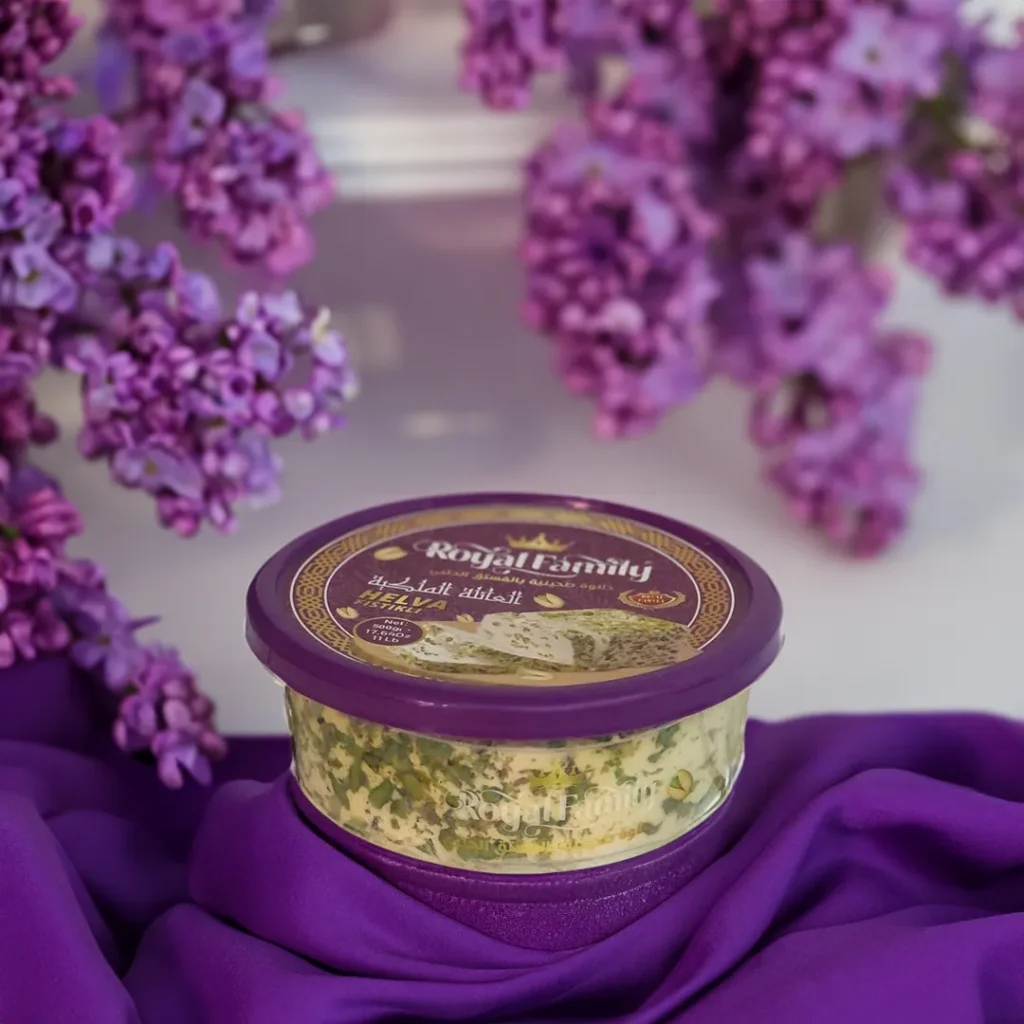
We make Royal Family plain and Antep pistachio halva in several sizes and packs. You can see every variety on our products page.